This itinerary takes the visitor through some of the most representative places of the Roveresque Lands, an area where ancient history, Renaissance architecture, artisan traditions and natural environments are intertwined in a rich and surprising route.
Mural of Cerbara
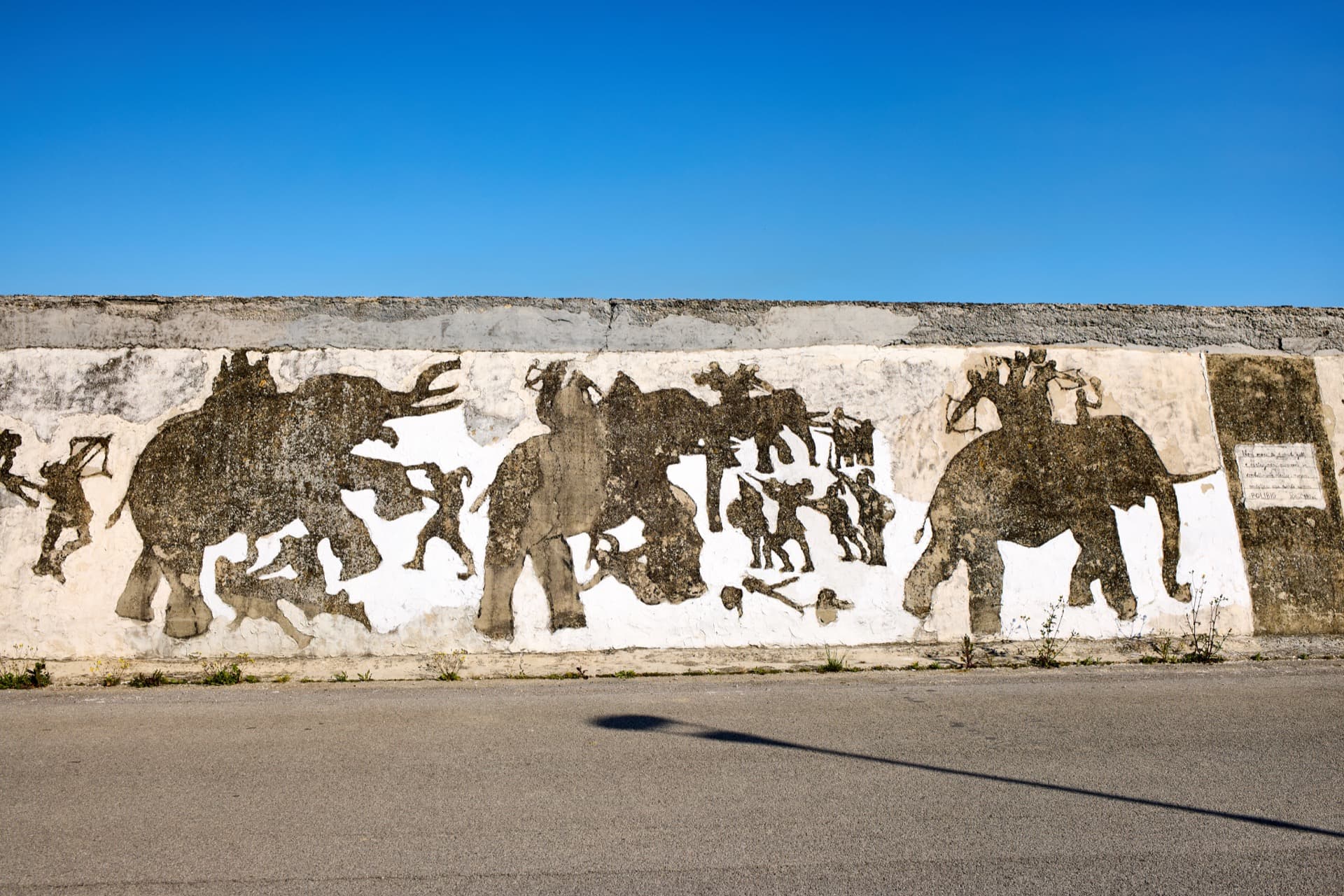
Mural of 114 meters dedicated to the Battle of Metauro. MURALE DI CERBARA - The mural was created in 2021 in Cerbara by the artist Natale Patrizi, in art Agrà, to recall the battle that took place in the plain of the river Metauro in 207 BC, when the army of thirty thousand men of the Carthaginian Asdrubal Barca, brother of Annibale, with his elephants, was defeated by the Roman consuls Gaius Claudius Nero and Marcus Livius Salinator, an epic clash that became crucial for the outcome of the Second Punic War in favor of the latter. The painting, which extends over a length of 114 meters for a height of almost 3 meters, was built on a retaining wall of an artificial watercourse that feeds a small hydroelectric power plant ENEL. The artist has used the ancient technique of painting "lime" without the use of colors, deriving the silhouettes of the figures to be represented from the vegetal layer of mosses, lichens and molds, which covers the masonry. The result is amazing: an endless sequence of silhouettes surrounded by white, plastic forms in chiaroscuro that seem to emerge from nowhere, twisted figures of men and animals opposed in bloody challenges, distorted faces in grimaces of pain, Bodies exhausted by the struggle and mutilated by weapons, overwhelmed by the strength of the pachyderms and overwhelmed by the intensity of the fighting. In a very short time, from wall degraded and abandoned, the site has become a popular tourist destination for scholars, photographers and visitors from different parts of Italy and abroad.
Ipogeo
HYPOGEUM - In the vicinity of the wall, going down the steps worn by time, you enter a suggestive and mysterious environment dug into the tufa subsoil at about seven meters deep. The hypogeum, which seems to date back to the first centuries AD, presents the typical cruciform plant of a basilical plant, with a main corridor intersected by horizontal arms, a choice that suggests a function of sacred worship of this place, reinforced by the presence of ancient symbols attributable to an archaic Christianity, in which are still confused pagan icons; both the walls and the vault are in fact decorated with engravings of various and mysterious nature, among which stands out for recursiveness the so-called "flower of life", a stylized and symmetrical six-petal flower already used in pre-Christian times. Of clear Christian origin are also the crosses of different sizes traceable in various points of the cave, while it is more difficult to decipher the floral symbol, probably a lily, that with its stylized figure seems to emerge from three necks engraved between the luciferous niches obtained in the walls.
MuSa - Museo Storico Ambientale
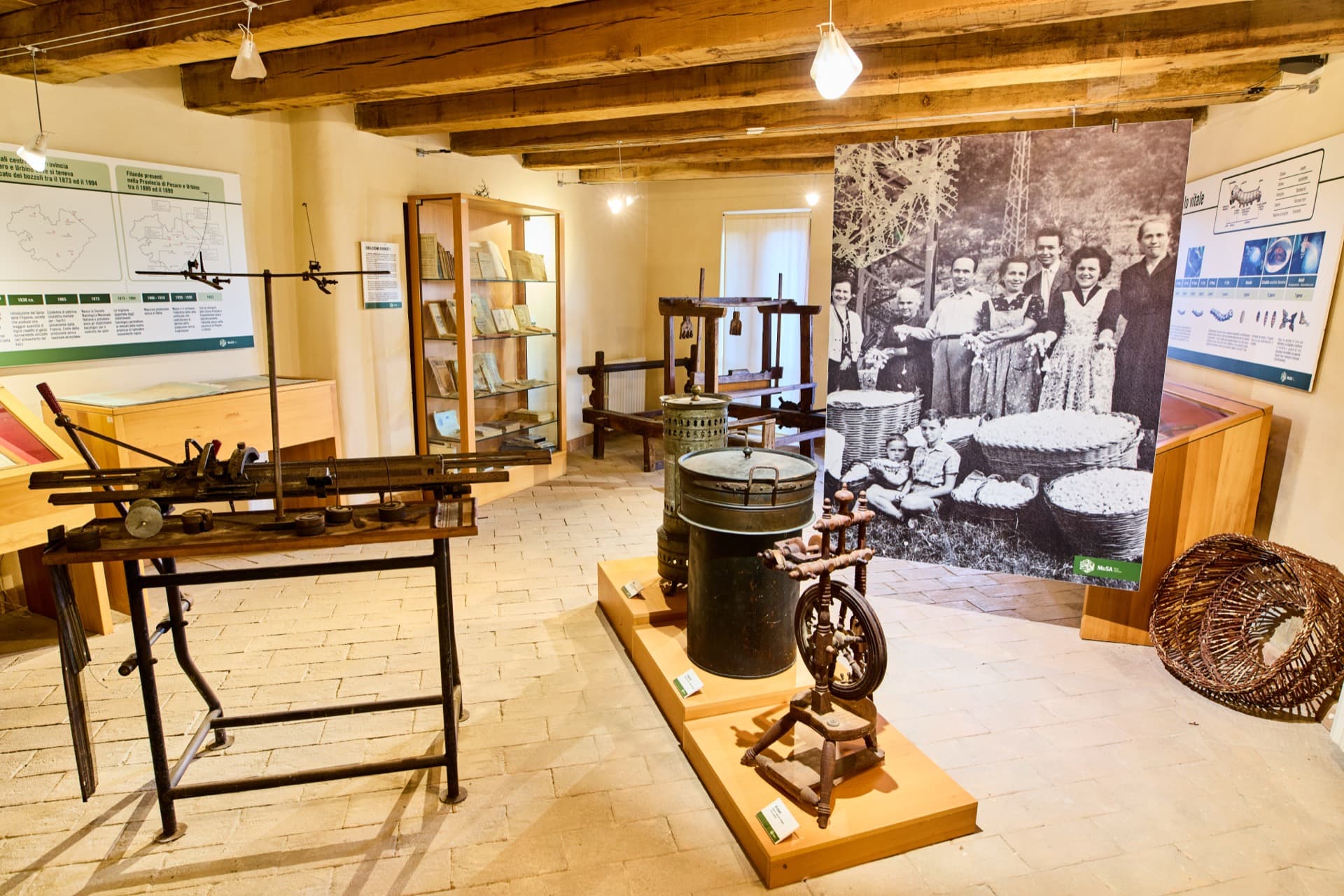
The MuSa (Historical-Environmental Museum) was established in 2007 in a restored building, the old "Casa della Mina", which rests partly on the walls of the northeast side of the Castle of San Giorgio di Pesaro. The outdoor garden, suspended on the ancient walls of the castle, is a small botanical garden adorned with tree essences, aromatic and medicinal plants. On the ground floor are located the rooms dedicated to beekeeping and honey production, silkworm farming, silkworm breeding and the production of precious fabrics, with an exhibition of tools and materials related to this type of work; on the first floor you can admire the rich taxidermy collection with over two hundred stuffed animals donated by Mr. Vittorio Branchini, a testimony of an art that boasts an ancient local tradition.
Auditorium Santa Caterina
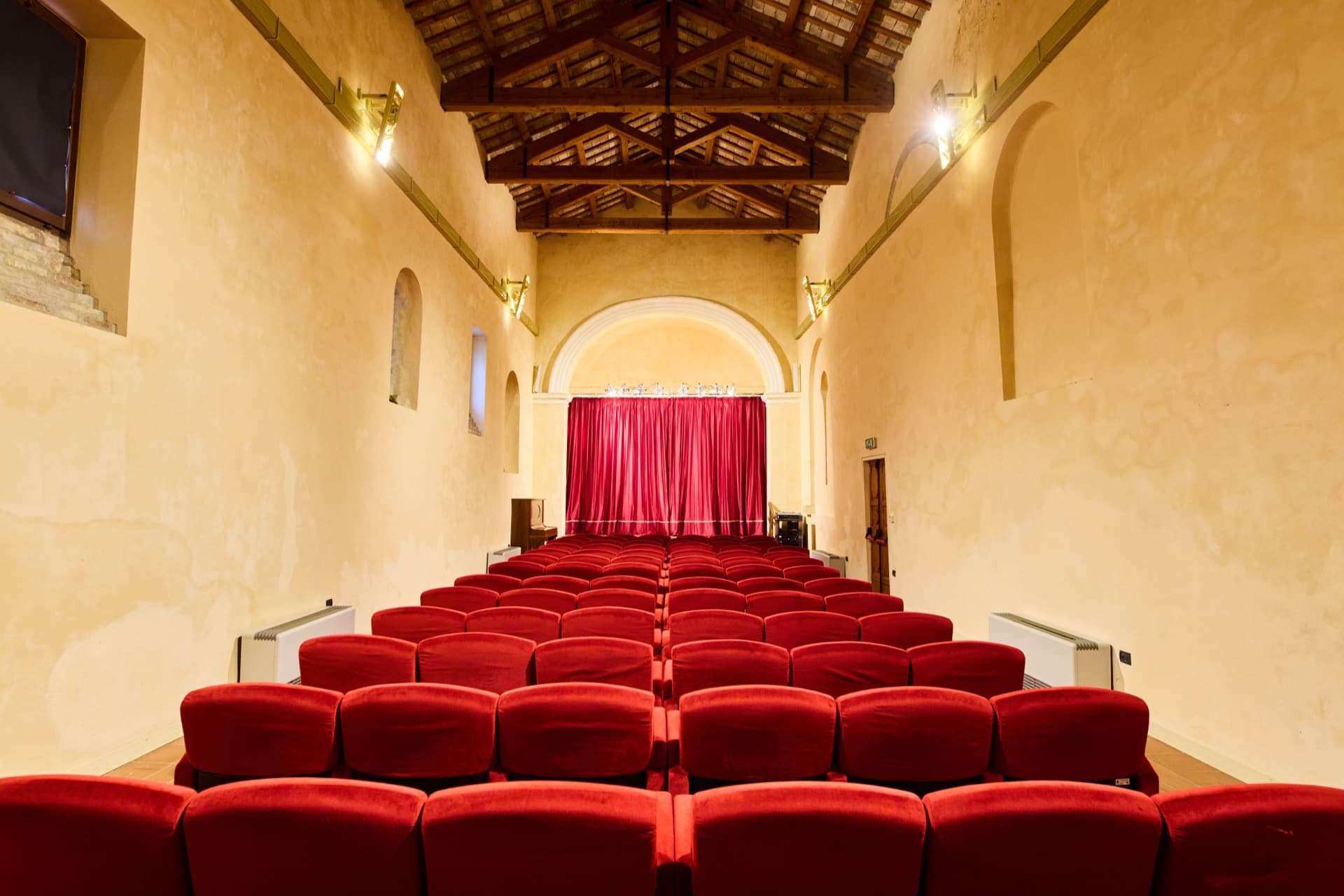
AUDITORIUM SANTA CATERINA - The former convent of Santa Caterina d'Alessandria was erected in 1582 with the consent of the Duke of Urbino Francesco Maria II Della Rovere and the Bishop of Fano, Mons. Francesco Rusticucci. The former convent was formed by a courtyard and two overlapping lodges, as well as the former conventual church that still preserves its ancient structure with the entrance to the sacristy. Under the former church were the granary, cellar, refectory, kitchen and stable. The external facade of the church has been restored, while its interior has been renovated to be used as a theatre and conference room, with adjoining service rooms, including a long side corridor equipped for exhibitions and art exhibitions. The entrance still preserves the sandstone frame and the oak door is the original one.
Parco della Busca
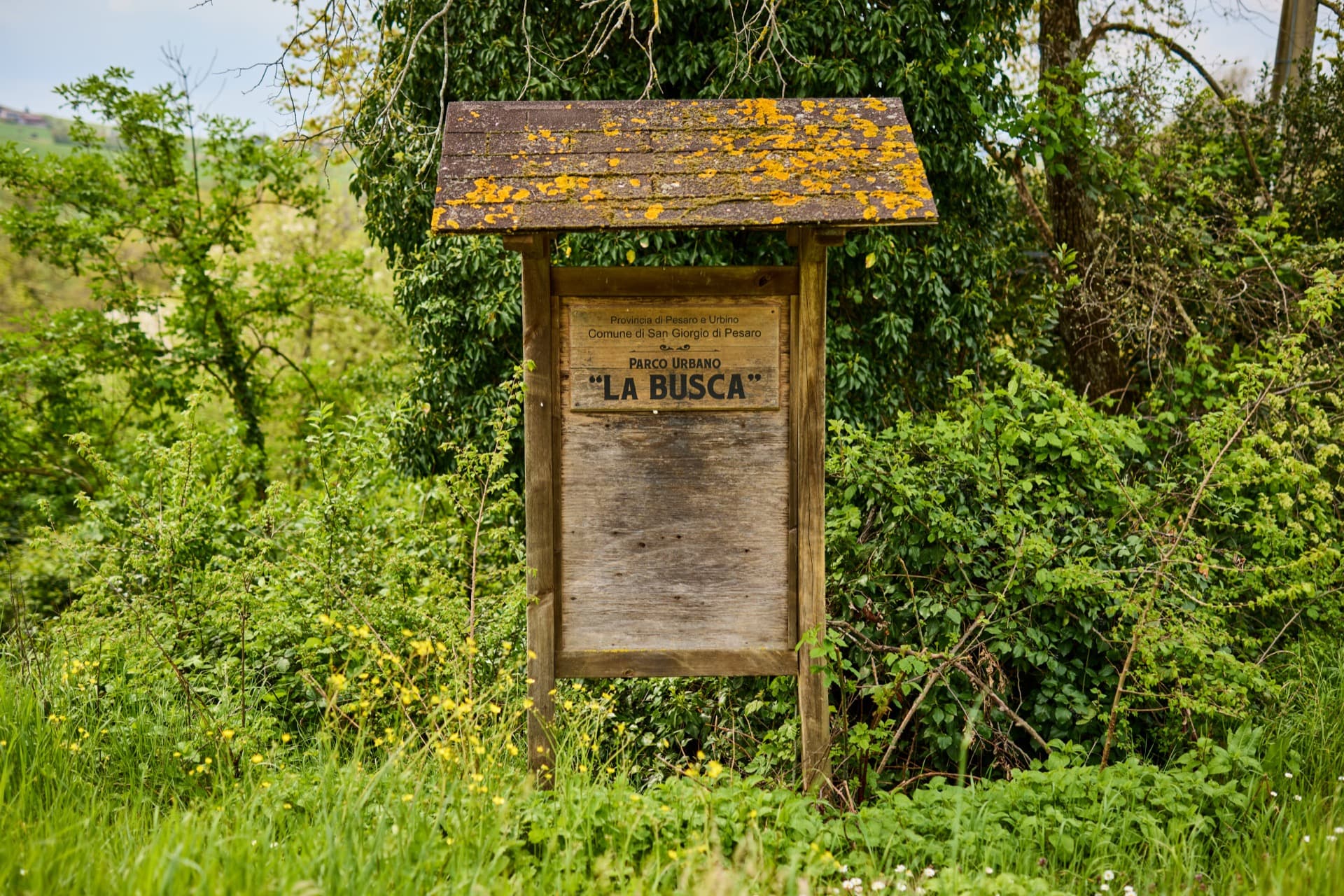
A small natural area located below the town of San Giorgio di Pesaro, characterized by an interesting botanical diversity, with native trees, and frequented by local wildlife, including numerous species of birds, both resident and migratory. For several years, the entire green area has been entrusted to the "Si Fuoristrada" association, which oversees its periodic maintenance and safeguards its environmental and naturalistic integrity. The entire area is open for outdoor activities and features recreational facilities for those wishing to experience nature and observe the local plant and bird world.
Sanctuary of San Pasquale Baylon
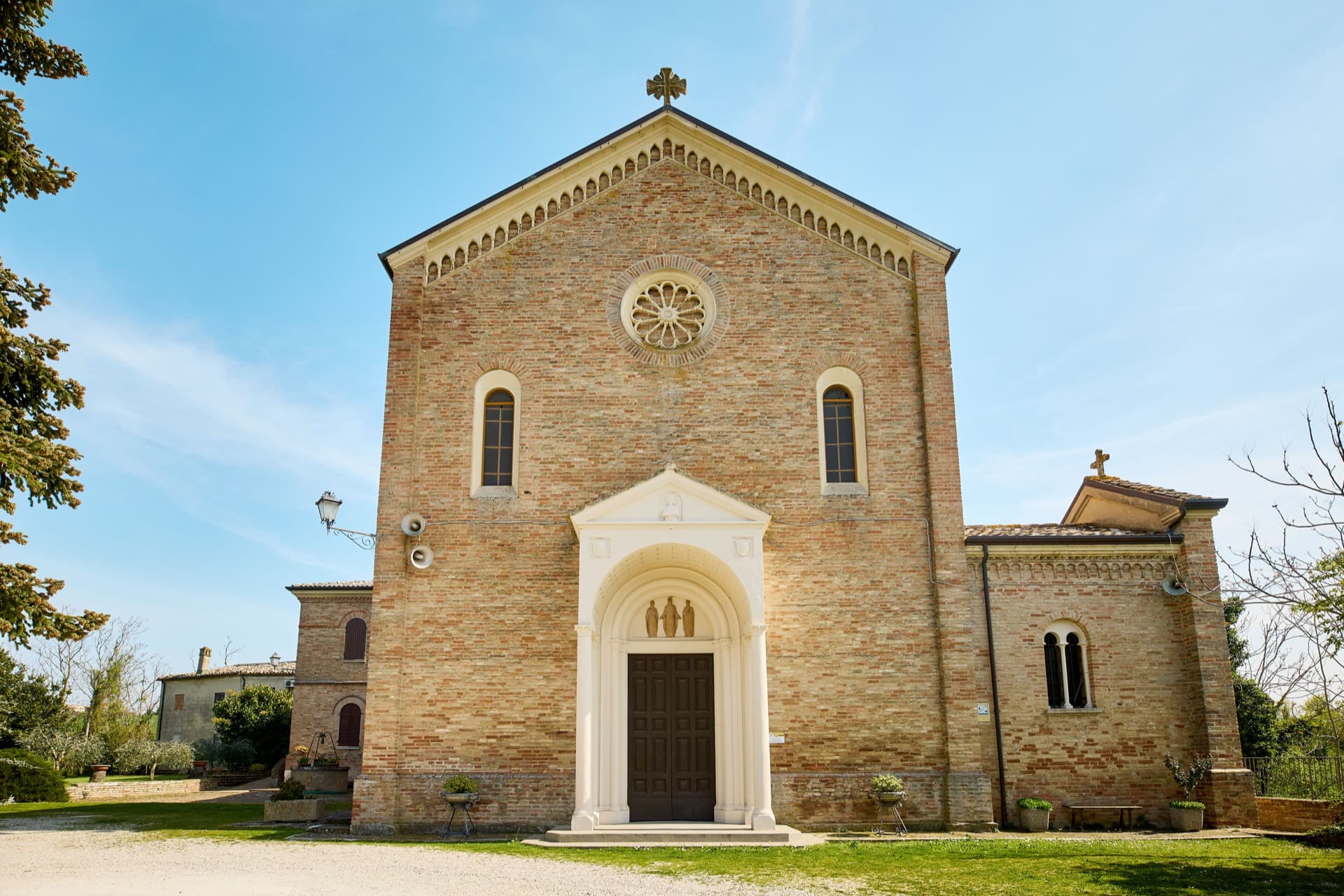
CONVENT OF SANTA MARIA DELLA MISERICORDIA (SANCTUARY OF SAN PASQUALE) - The construction of the Convent of Santa Maria della Misericordia dates back to 1523, next to a forest not far from the castle of Poggio, for munificenza of the noble poggese Mariotto da Sajano, under license of Pope Adrian VI, For the perpetual use and dwelling of the regular and observant friars minor. In 1660 the whole complex, due to the degradation due to the elapsed time, is rebuilt almost entirely. Inside it are still preserved valuable paintings and a monumental eighteenth-century wooden choir in walnut of the carver Giuseppe Tacchetti Fanese. In 1701, the Fathers of the Franciscan Community wanted to accentuate the spirituality of that place by introducing devotion to a saint of their order, San Pasquale Baylon (1540-1592), a Spanish friar who had recently been raised to the altar for his poverty, humility and love of children. The veneration of the Saint spread among the population of the place and nearby castles, often receiving thanks and passing on their worship, consolidating in time a deep-rooted religious tradition that still remains through a great contest of people. Since 2017, San Pasquale Baylon has been appointed Patron of the new Municipality of Terre Roveresche, a recurring celebration on 17 May each year, in memory of the day when the Saint fell asleep in the name of the Lord.
Orciano - Historic Centre
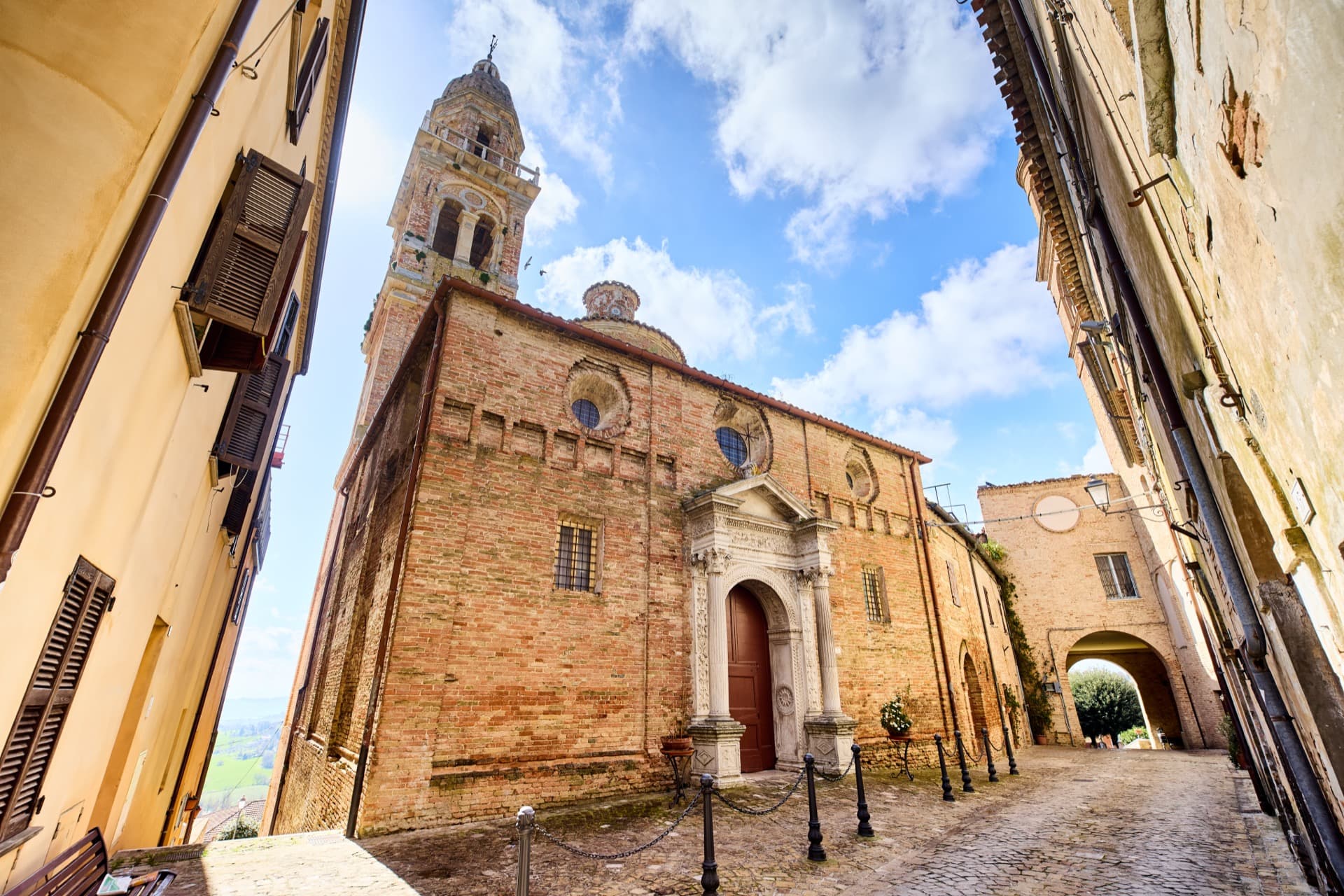
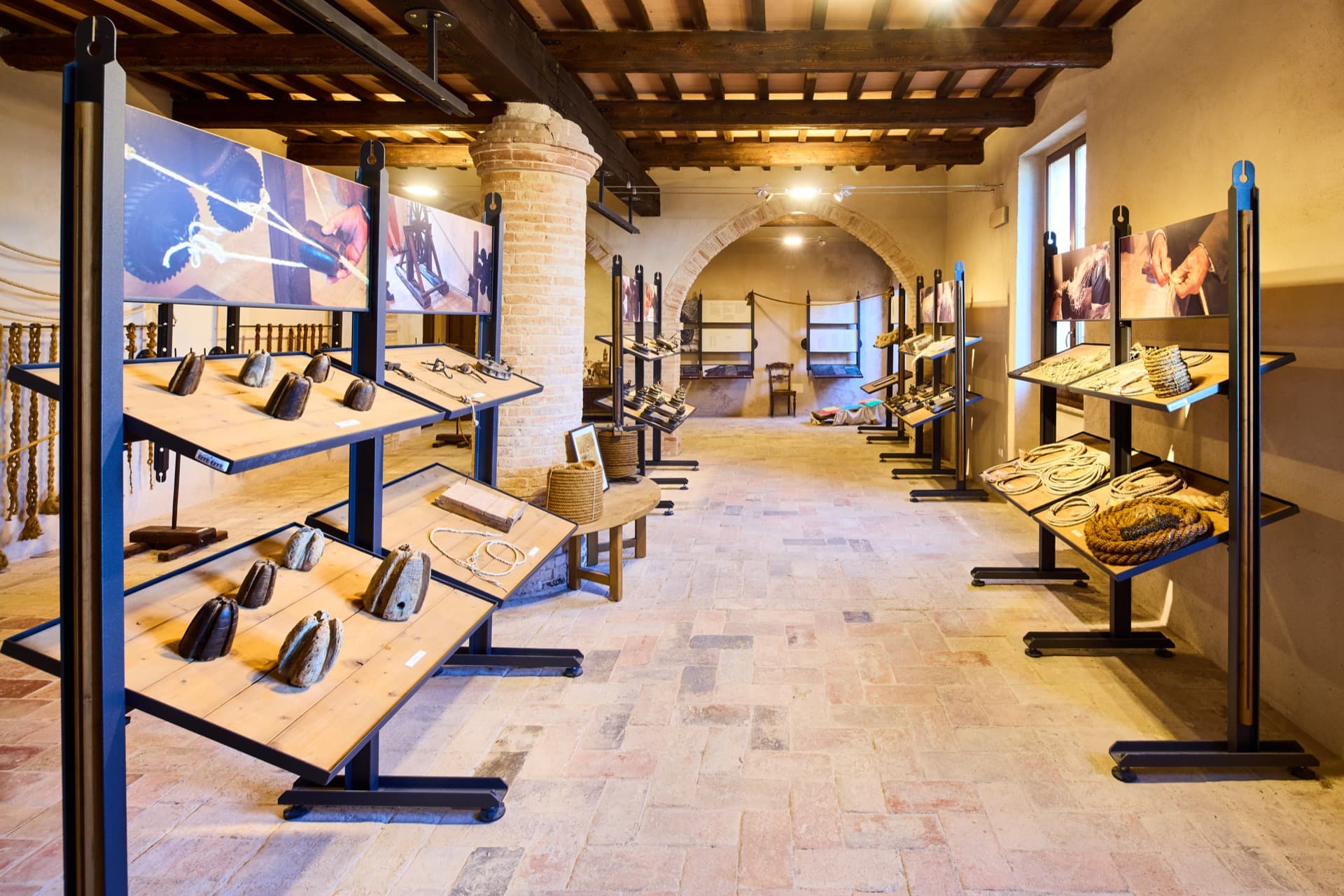
Crossing the Terre Roveresche, the look can easily be captured by two tall and slender silhouettes that rise on top of the hill of Orciano: the civic bell tower and the famous Malatestiana Tower that guard the settlement of the ancient castle. The Malatesta Tower was erected in 1348 by Galeotto Malatesta as a watchman to check the Orcianesi, who had rebelled against the lordly authority and the unbearable taxes imposed. The base of the splendid tower forms a single body with the underlying Church of Santa Maria Nuova, built in 1492 on a project by Baccio Pontelli. The interior of the church is sober and elegant, with the delicate white plaster and the curious play of blind and open oculi distributed on the dome and vaults, but what strikes most is the wonderful entrance. The portal is carved in white stone in the shape of a tabernacle, with two fluted columns with Corinthian capitals and precious bas-relief friezes, which give the feeling of entering an ancient Greek temple. Some have even ventured the hand of Raphael in the design of this portal, although there are no documents on it. Continuing in the direction of the pretty square Giò Pomodoro, we find the Museum of the Rope and the Brick, a place born to keep alive the memory of the traditions and of the typical handicraft activities of the Orciano history. In the first room of the museum, the focus is on the production of brick, an artifact made from earth, fire, water and human knowledge, of which various examples are exhibited, as well as extensive historical and photographic documentation of the ancient furnace. The second room is dedicated to the work of the "cordai", an artisanal excellence of Orciano, who supplied with their ropes the mariners of all the Marche. Raw hemp was carded and spun with the help of perfectly preserved machinery, in a work involving experienced workers, but also children or grandchildren who helped in the simplest stages of processing, Ready to learn the secrets of their trade and inherit their traditions.
Malatestiana Tower
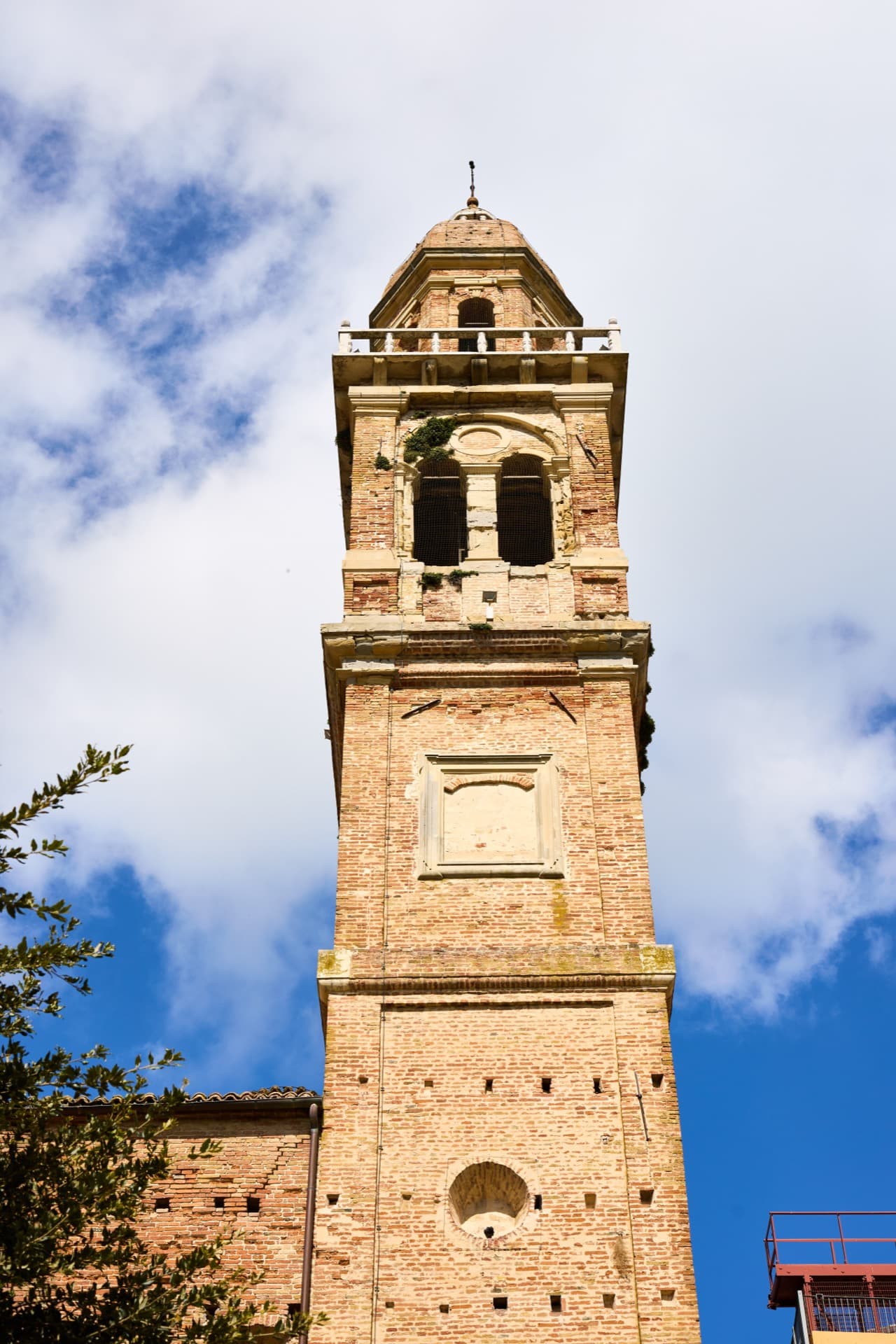
MALATESTIANA TOWER – Next to the 16th-century civic bell tower stands the tall, slender Malatestiana Tower, a superb brick structure with sandstone cornices and corner bands. This architectural gem, which rises over 45 meters above the ancient castle, was built in 1348 by the warlike Galeotto Malatesta as a watchtower to control the rebellious inhabitants of Orcia, guilty of rebelling against the lordly authority and the unsustainable taxes imposed on them. The tower was remodeled in 1492 by the Florentine architect Baccio Pontelli and a few decades later by Filippo Terzi from Bologna, architect to the royal families of Spain and Portugal, who oversaw its elevation on commission from Marquis Pietro Bonarelli.
Church of Santa Maria Nuova
SANTA MARIA NUOVA - Built in 1492 by Giovanni Della Rovere on a project of the Florentine architect Baccio Pontelli, it is the precious heart of the historic center of Orciano. The entrance of the church is adorned by a precious portal carved in white stone in the shape of a tabernacle, resting on two elegant fluted columns with Corinthian capitals and precious bas-relief friezes, which give the feeling of entering an ancient Greek temple. Although there are no documents on the subject, tradition says that in the design of the portal is the hand of Raphael Sanzio of Urbino. The interior of the church is sober and elegant, with the delicate white plaster and the curious play of blind and open oculi distributed on the dome and vaults; remarkable interest attract the valuable decorations in stucco executed by plasticiatore urbinate Federico Brandani. In 1766 Pope Clement XIII proclaimed the church of Santa Maria Nuova "Basilica Collegiata".
Auditorium Santa Caterina
AUDITORIUM SANTA CATERINA - The former convent of Santa Caterina d'Alessandria was erected in 1582 with the consent of the Duke of Urbino Francesco Maria II Della Rovere and the Bishop of Fano, Mons. Francesco Rusticucci. The former convent was formed by a courtyard and two overlapping lodges, as well as the former conventual church that still preserves its ancient structure with the entrance to the sacristy. Under the former church were the granary, cellar, refectory, kitchen and stable. The external facade of the church has been restored, while its interior has been renovated to be used as a theatre and conference room, with adjoining service rooms, including a long side corridor equipped for exhibitions and art exhibitions. The entrance still preserves the sandstone frame and the oak door is the original one.
Gio' Pomodoro Square
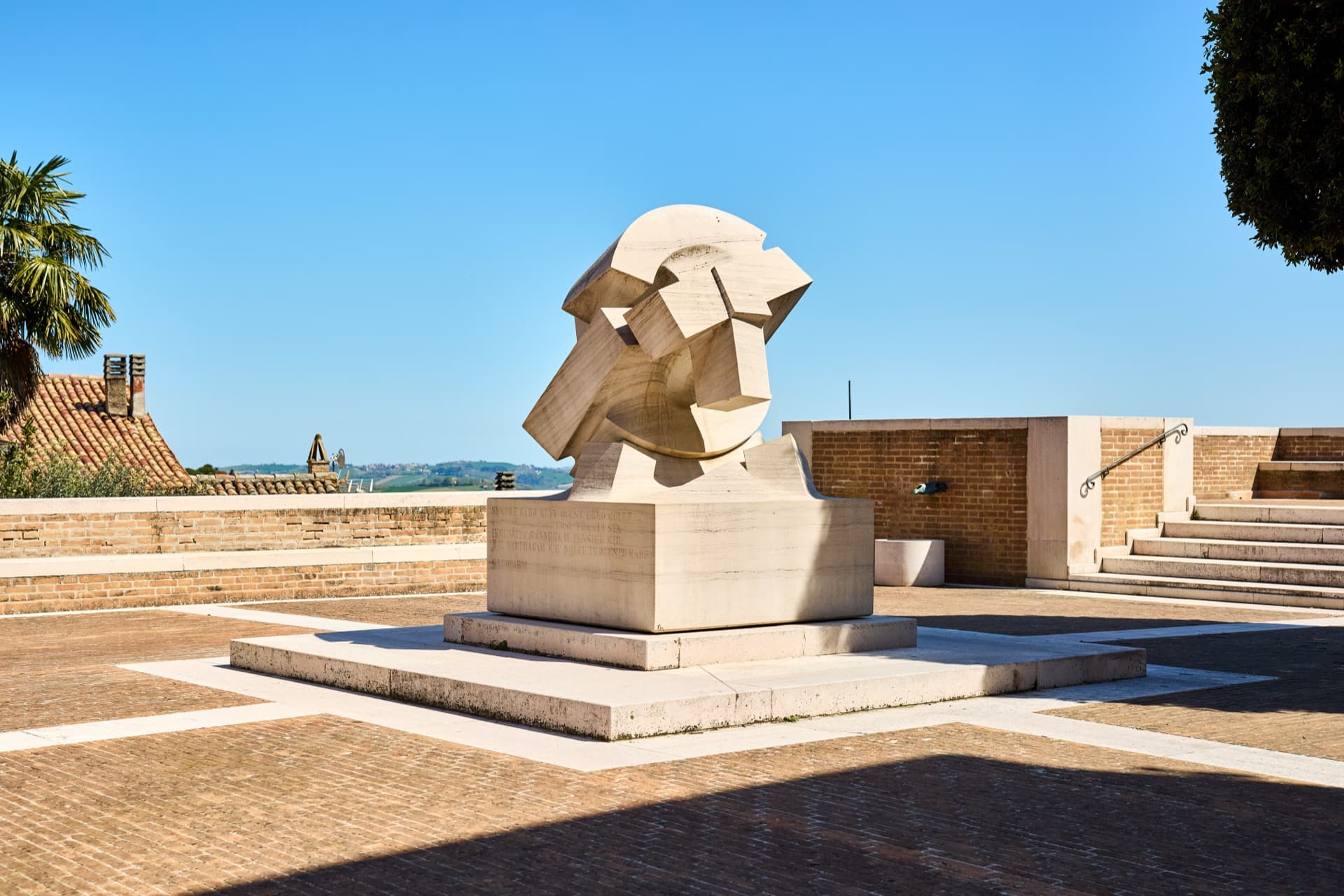
PIAZZA "GIO' POMODORO" - The square, inaugurated in 2004, is named after Gio' Pomodoro, the versatile artist born in Orciano di Pesaro in 1930 and considered one of the most important abstract sculptors of the international scene of the twentieth century. It was designed by the same artist in the place where his birthplace once stood, using for external finishes the white stone of "Trani" integrated to the terracotta pavement with full brick bricks "hand type". A monumental sculpture called "Sun Deposed" has been placed in the center of the square, as well as two bronze works, such as "La Corda" and "L'Orcio", located on the sides of the entrance to the main square. It is a tribute of the great artist to the country where he spent his childhood, a perennial testimony of the ancient crafts that have animated the life of the village in the past centuries.
Museum della Corda e del Mattone
The "Museo della Corda e del Mattone" is located in the historic center of Orciano di Pesaro; a place born to keep alive the memory of the traditions linked to the two main typical handicraft activities of the history of Venice: the cordage trade and the production of bricks until 1985 in the old furnace. In the ground-floor hall of the museum, the focus is on the production of brick, an artifact of earth, water, fire, knowledge and human industriousness, whose history is told by a rich sampling that crosses the centuries, from the Roman period to contemporary age, as well as a wide historical and photographic documentation of the ancient Fornace dei F.lli Gasparini. The room on the first floor is dedicated to an excellent craftsmanship of Orciano and the work of the forty "cordai" who once supplied with ropes and fishing nets the marineria of the entire Adriatic coast up to Venice, as well as hosting the exhibition of their tools for hemp processing.
Square of the Fornace
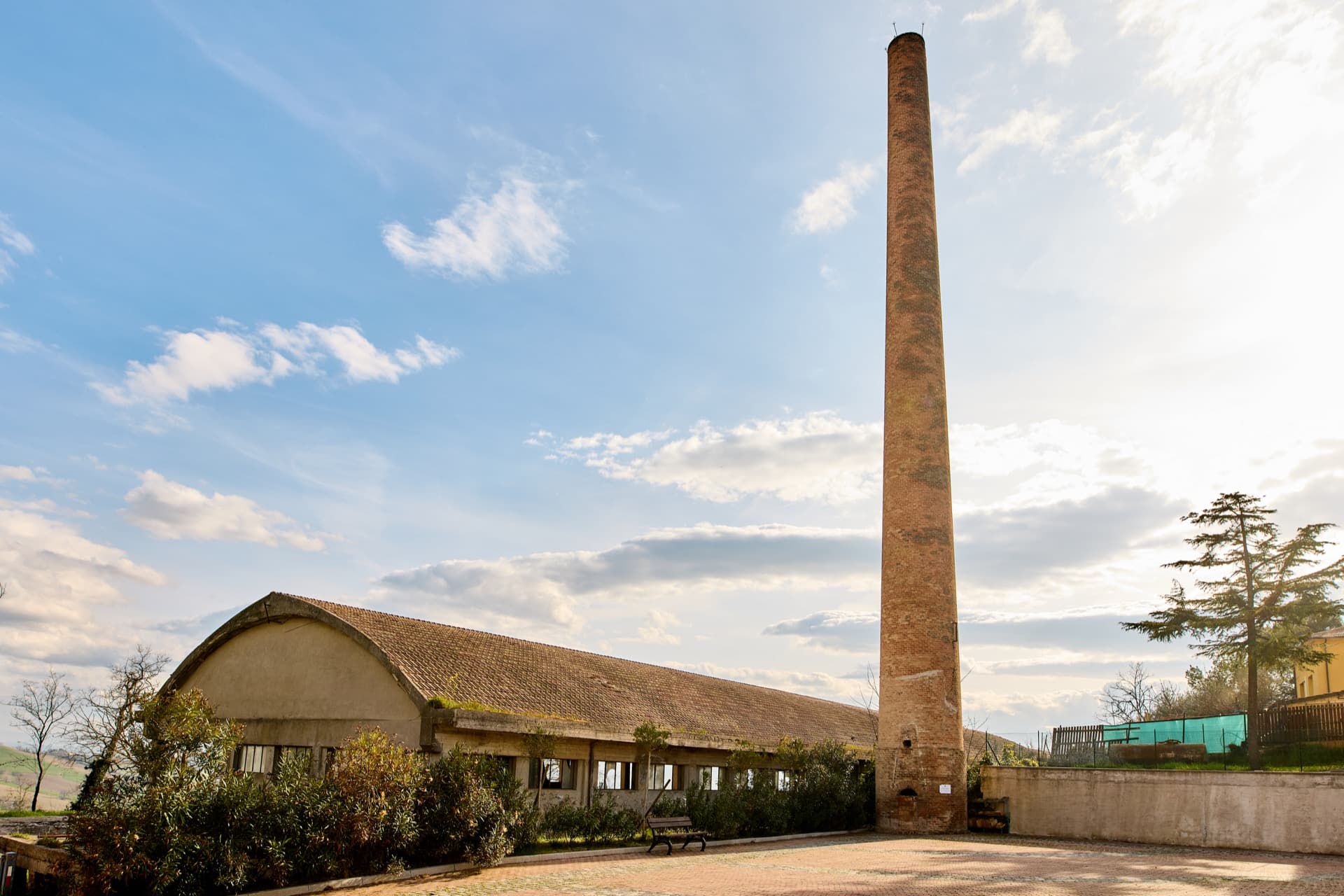
PIAZZA DELLA FORNACE - In a part of the vast area disused and abandoned for decades, in front of the imposing chimney, the Municipality of Terre Roveresche, after having acquired the property, has provided urban redevelopment and the construction of a square inaugurated in 2020. In the last century, the old brick kiln was an important productive reality that gave employment to many workers who with their sweat, their toil and especially with their humanity, have written pages of history particularly significant for the social development and economic growth of the territory. At the same time, the Municipality of Terre Roveresche has created an illuminated sidewalk that connects Orciano di Pesaro to the small town of Fornace, ensuring the necessary safety for pedestrian mobility.

Barchi - Historic Centre
On 1 January 2017, the Terre Roveresche was born: the previous municipalities of Barchi, Orciano di Pesaro, Piagge and San Giorgio di Pesaro joined together, each preserving their own history and culture, but sharing resources and energies along with everything they have in common. The Terre Roveresche is a country where tradition survives and is valued as a fundamental heritage by those who live it. Whether it is the ancient crafts, those still handed down as well as those told in museums, that are the typical products of the territory, wines and dishes that richly adorn the table, this place lives in time and out of time. In the Roveresche Lands ancient castles rise from the top of the hills that draw the curvilinear profile of the panorama, hiding among the narrow streets small jewels of inestimable historical and artistic value, with incredible uniqueness.
Porta Nova
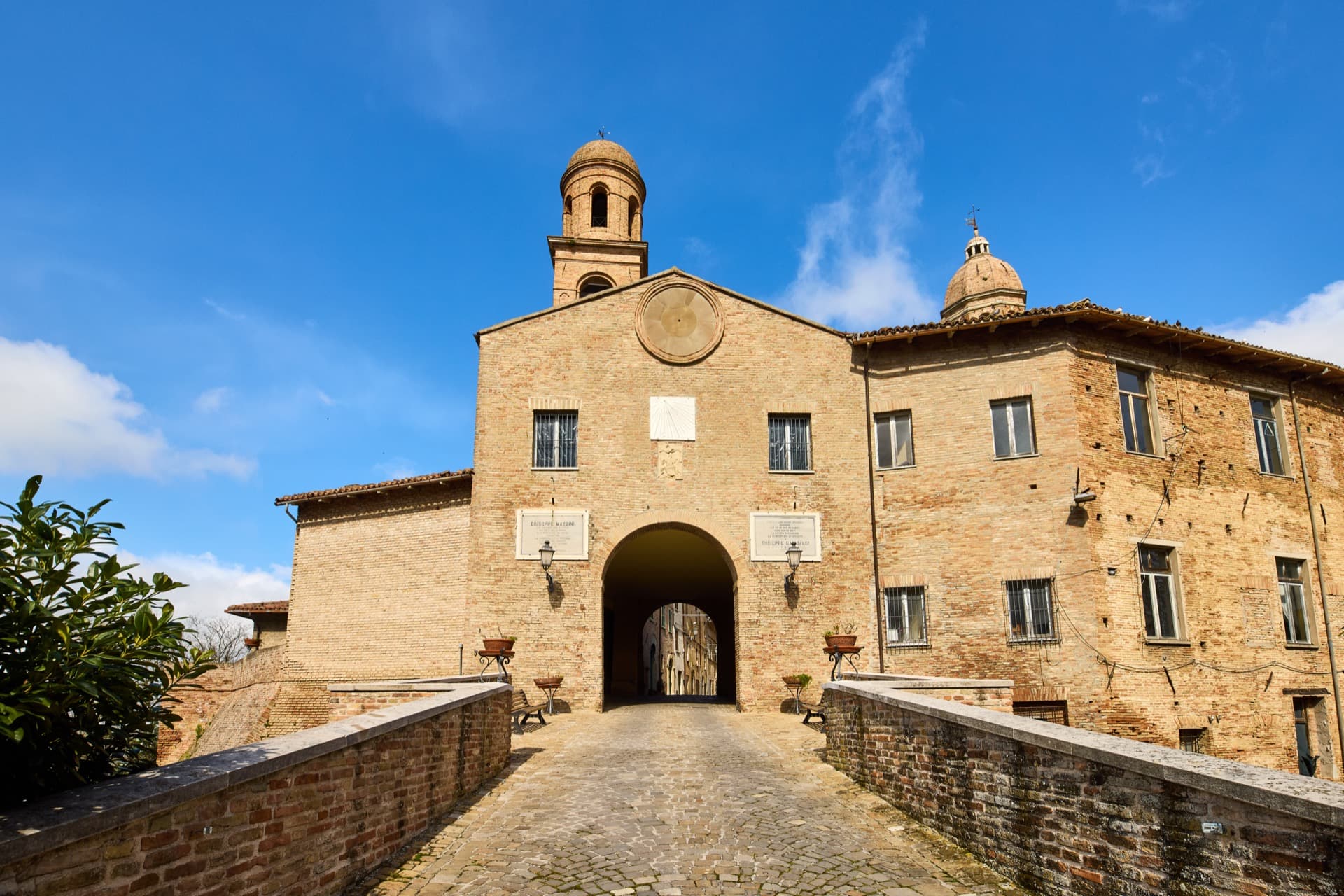
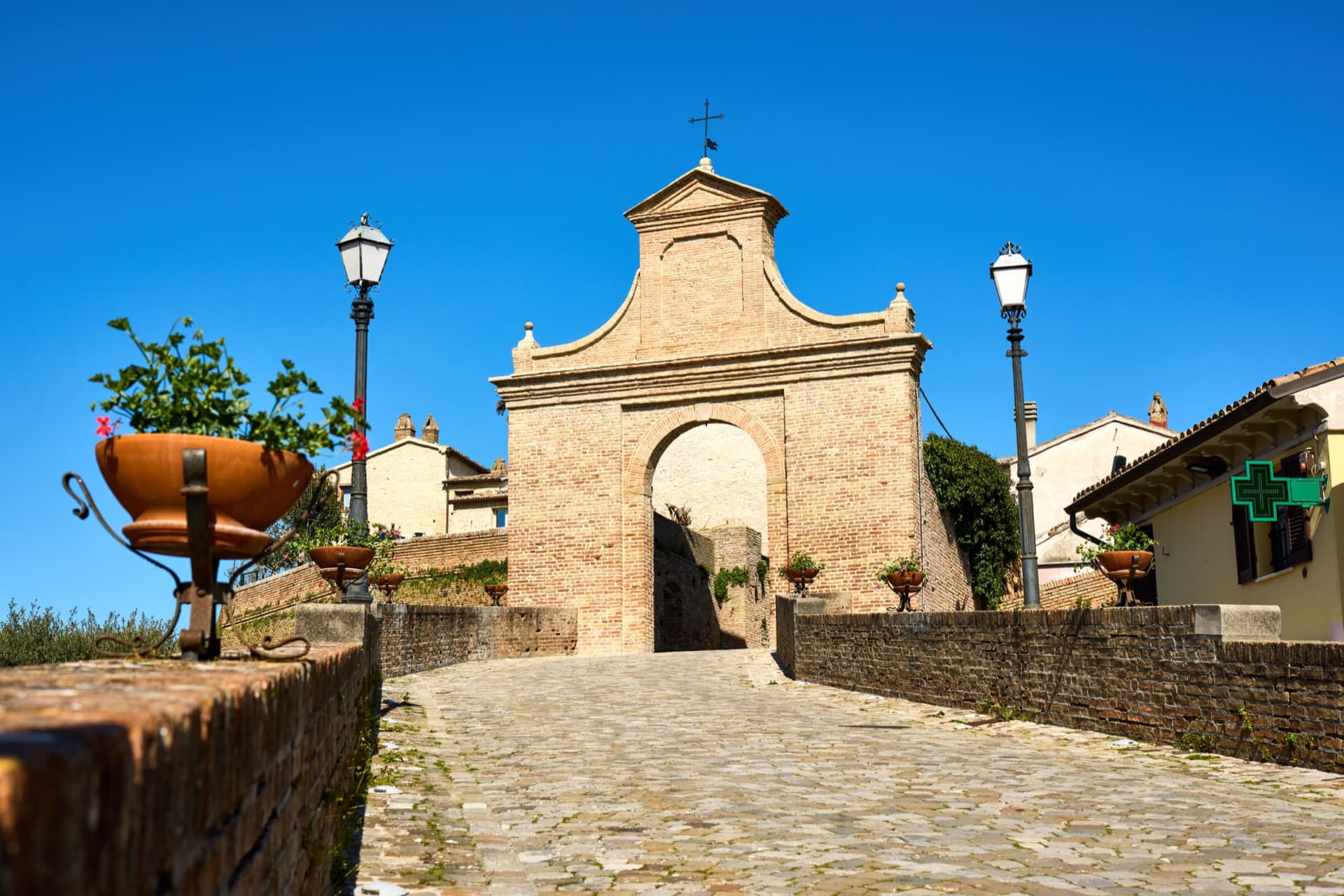
PORTA NOVA - The triumphal arch of the entrance to the Castle was designed by Filippo Terzi. Monumental, sumptuous and elegant, the "Porta Nova" stands majestically on top of the entrance ramp to the ancient walls of this small "Ideal City" of the Renaissance, completely reorganized in urban structure and architectural image by the great architect from 1571, at the behest of the marquis of Barchi Pietro Bonarelli, as if it were a single work of art, enriching it with monuments, of sumptuous buildings and effective military defence solutions.
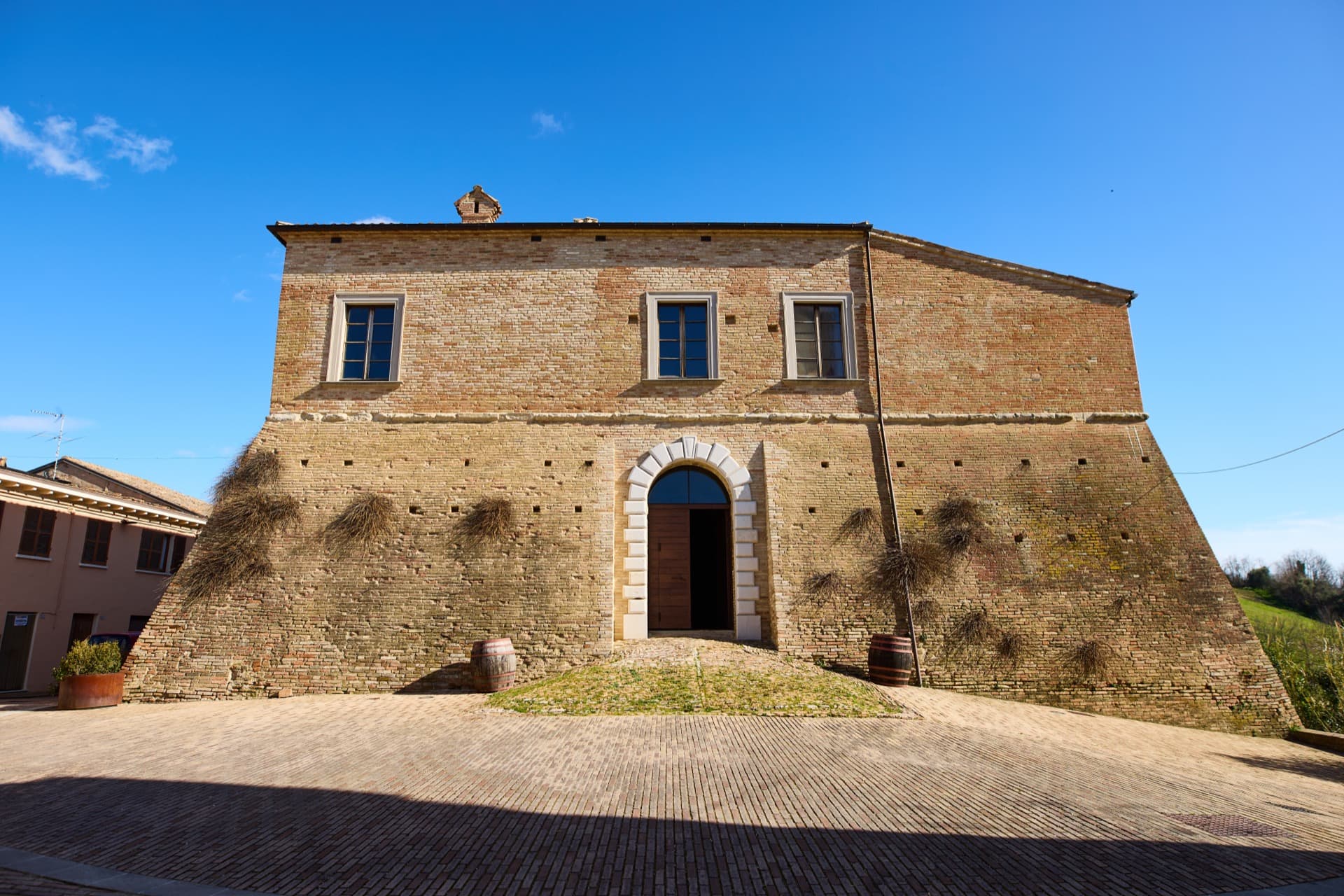
Palazzo Roveresco of Montebello
In the small village of Montebello, surrounded by medieval walls, there is a palace dating back to the year 1000, originally erected as a military fortification. Originally it was divided into three floors, with the warehouses in the highest part, demolished in the eighteenth century. The noble floor, which had eight rooms, plus the gallery and the little chapel, and the ground floor in which, besides the servants' room, there was the kitchen, the ovens and the laundry. In '300 it was a fief of the Sforza and from 1462 it was occupied by Federico da Montefeltro, count of Urbino. In '500 it belonged first to Cesare Borgia, then was annexed to the Duchy of Urbino. In the middle of the '500 Guidubaldo II Della Rovere assigned it as a feud to Count Antonio Stati, who was decapitated by the son of Guidubaldo II, Francesco Maria II Della Rovere. The walls and vaults were embellished with stucco decorations by Federico Brandani and with frescoes by Taddeo Zuccari. From 1609 to 1632, Lavinia Feltria Della Rovere stayed there, Marchesa del Vasto, sister of the Duke of Urbino Francesco Maria II, daughter of Guidubaldo II and Vittoria Farnese. Lavinia was an educated, generous and kind noblewoman, a prominent figure in the culture of the Renaissance, who maintained a close correspondence with the courts of all Italy, and who made the Palazzo di Montebello a center of cultural irradiation, second only to the Ducal Palace of Urbino.
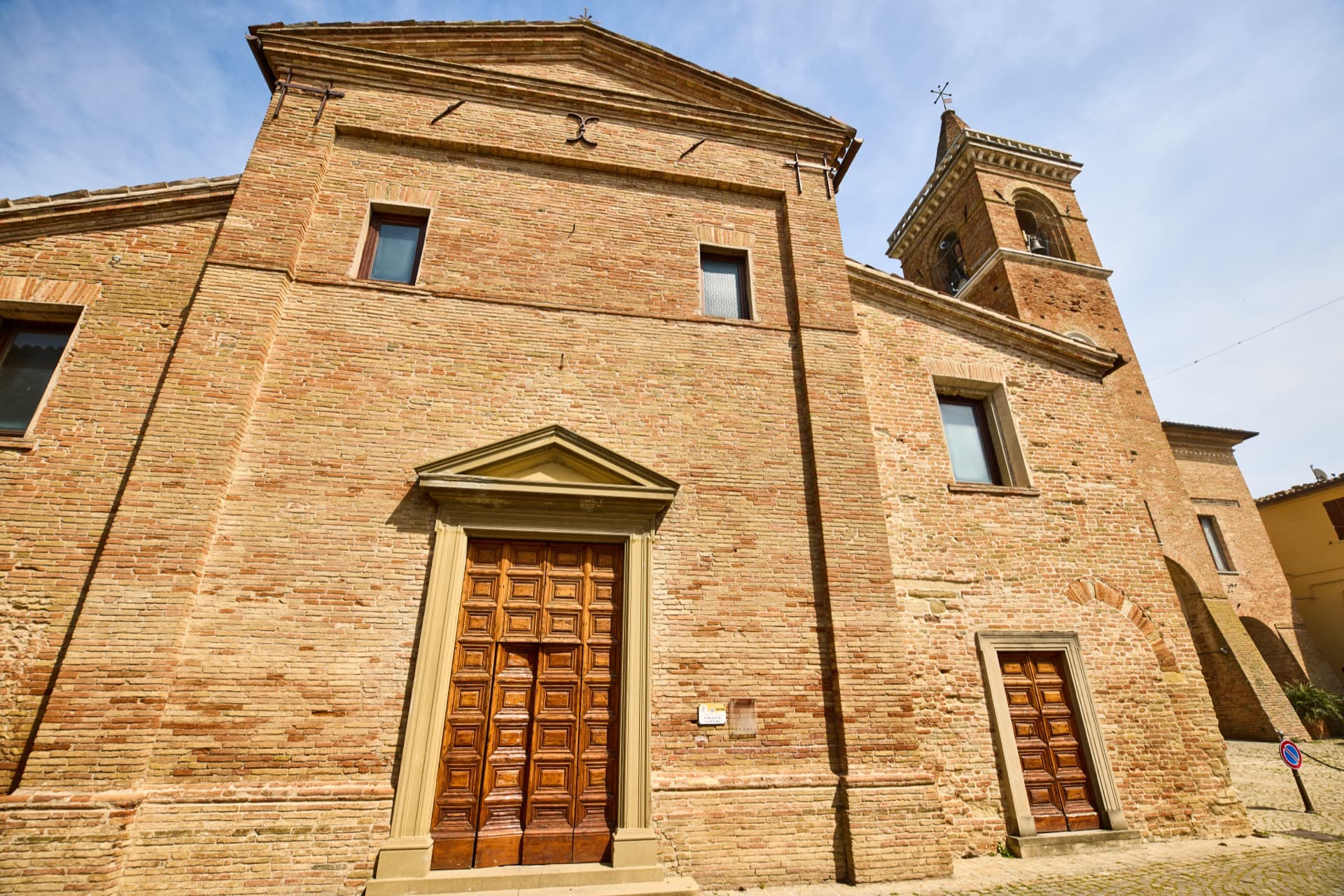
Collegiate Church Sant'Ubaldo
COLLEGIATA DI SANT'UBALDO - Of ancient origins, redesigned by Filippo Terzi in the '70s of the sixteenth century, it was lengthened and reopened in 1605. Facing the main square of the castle, it has a structure with three naves, with the central presbytery raised, to which sides are placed two chapels. The original Renaissance floor, formed by precious slabs carved in pink and white stone, has been brought to light with a patient work of restoration and reconstruction. Inside the church, the side altars frame imposing and valuable paintings of baroque school, while precious wooden statues enrich the temple. In the choir room, above the entrance bussola, is preserved an important historical organ dated 1786, the work of the Venetian maestro Gaetano Callido, best representative of the eighteenth-century neoclassical organaria school. The quality of the materials used and the preserved works of art, make the Collegiata di Sant'Ubaldo a kind of magical temporal mirror that reflects the image of Barchi of the past centuries and especially of the Renaissance, when the town and the noble families that ruled it lived in its heyday.
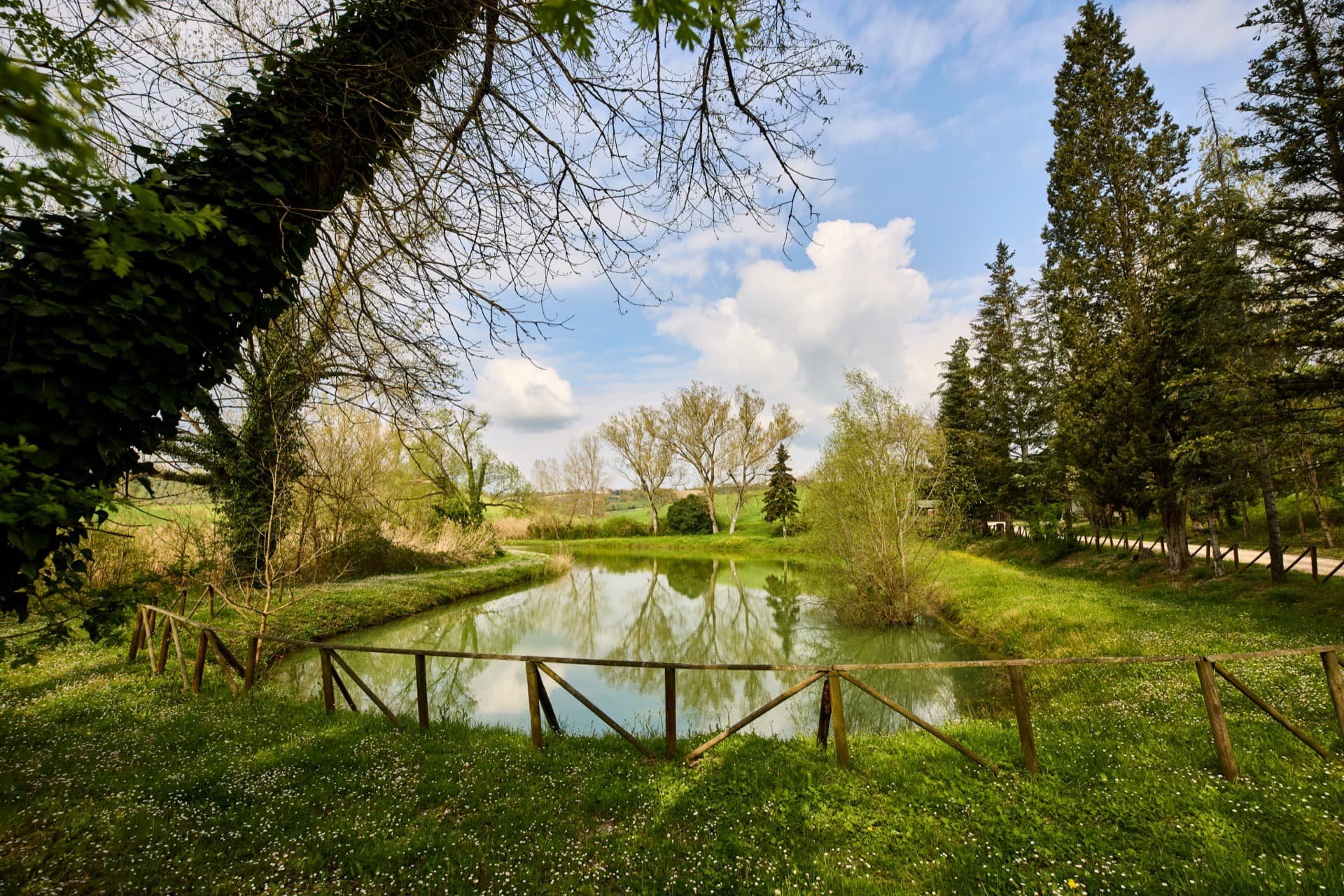
Lago delle Rose
ROSE LAKE - Downstream of the former "Bergamo" lake, a large reservoir emptied in 1985 and currently being restored, there is a small lake called "Rose Lake". The whole area is particularly suitable for outdoor activities and nature excursions on foot, by bike or horseback. Both the small body of water and the large surrounding green spaces are entrusted to the management of the association "Si Fuoristrada", which takes care of its periodic maintenance and safeguards the environmental and naturalistic integrity. The area overlooking the small lake is illuminated and equipped with recreational equipment available to those who enjoy living experiences in nature, immersed in the silence and tranquility of the countryside.
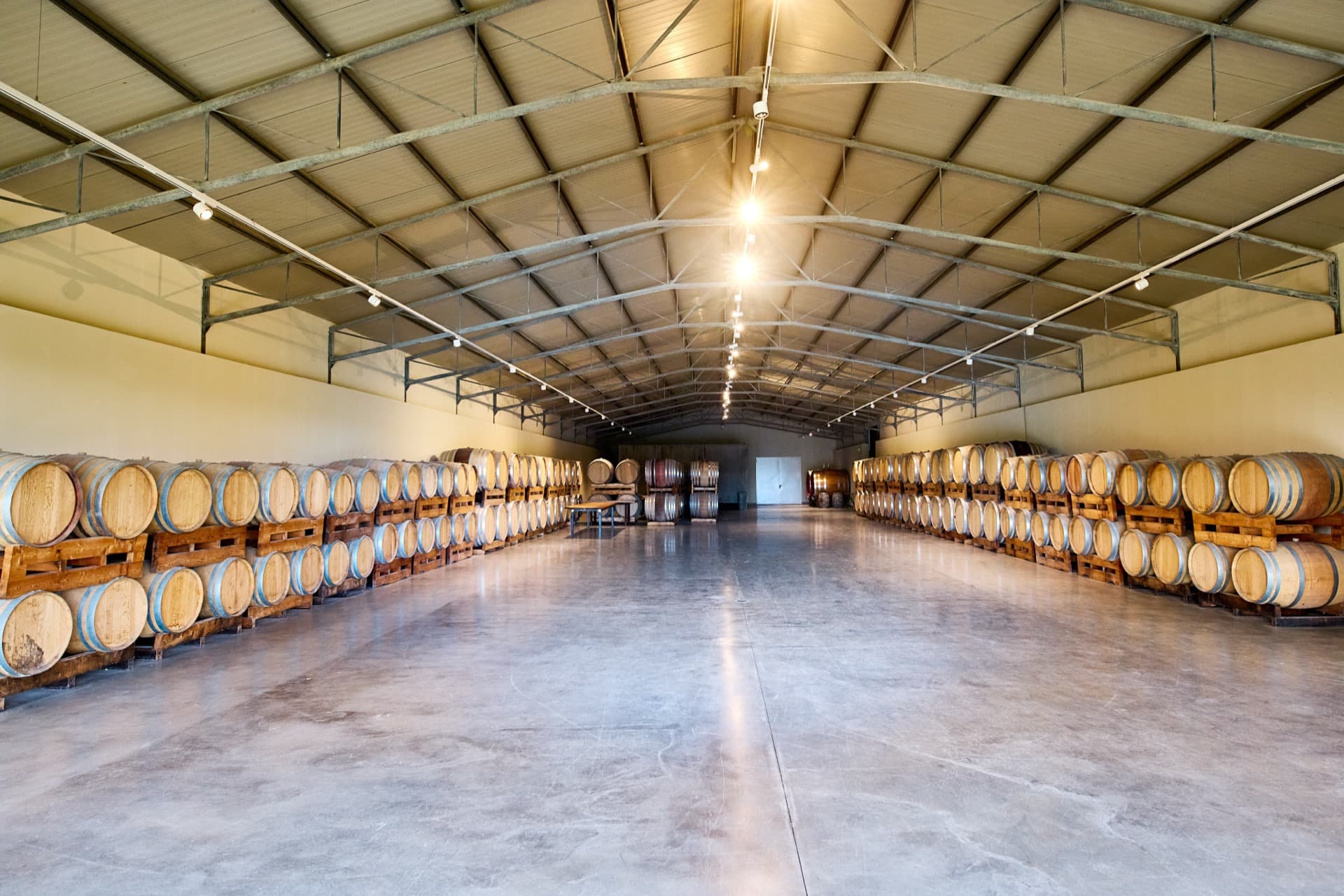
Cellars
For those who want to delve deeper into the area's winemaking tradition, the tour may include a visit to the local wineries. The Fiorini Agricultural Company allows you to discover a love of the land and wine, a passion passed down for generations starting with Valentino and Luigi Fiorini, with an approach that respects nature and is attentive to the quality of the products. Another reality to visit is the Guerrieri Agricultural Company, where viticulture, olive growing, and cereal cultivation are managed according to traditional principles and rigorous internal controls, ensuring the authenticity of each product as if it were intended for loved ones.
-
Fiorini Agricultural Enterprise
- Tel: 072197151 -
Guerrieri Agricultural Enterprise
- Tel: 0721-890100
Shopping
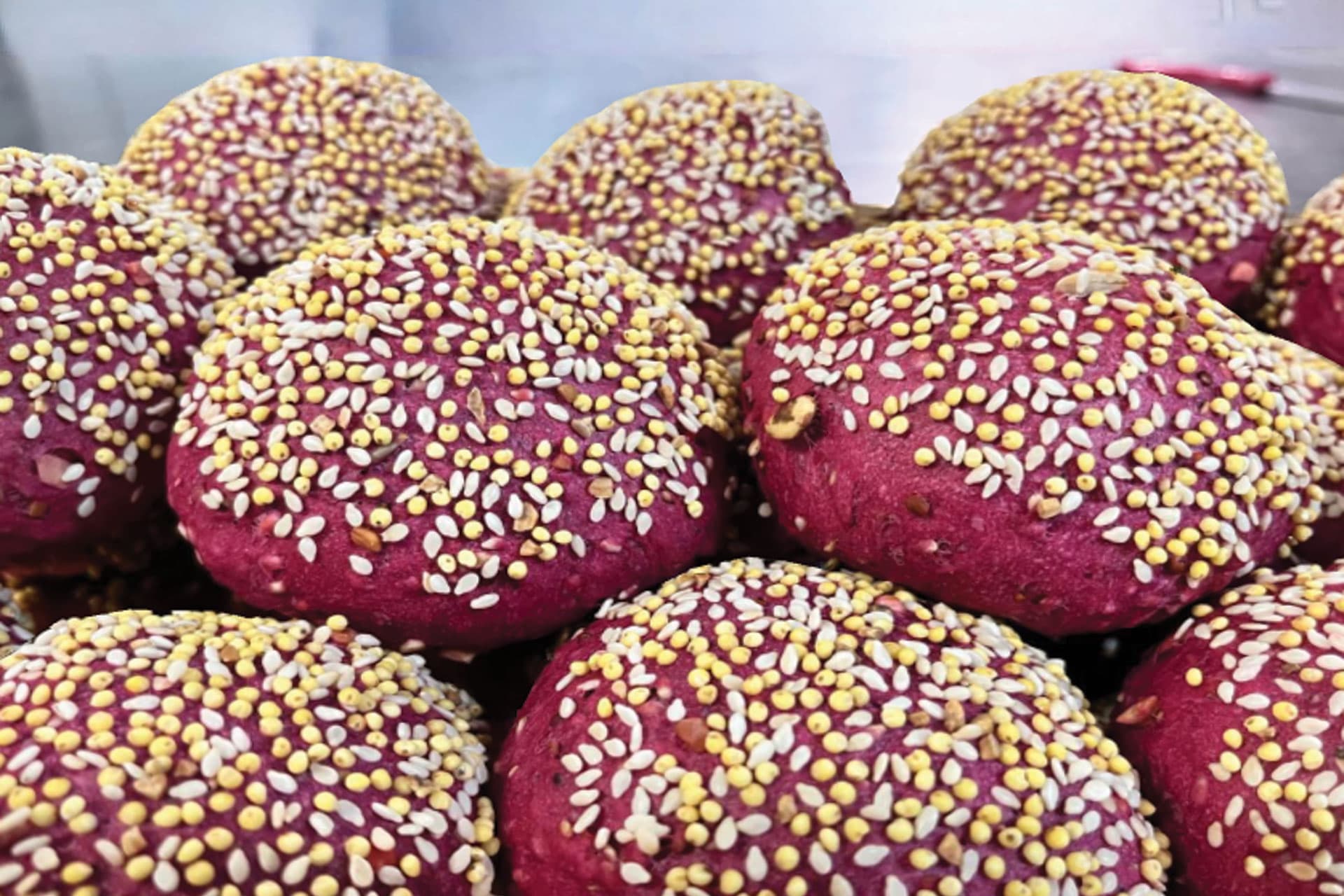
Those who want to take home the excellence of the Terre Roveresche area will find numerous outlets where they can purchase gastronomic, artisanal, and other products. Recommended options include the Roberti Farm, the Marconi Bakery, and the Casa del Fiore, places that offer a selection of local specialties and objects linked to the tradition of the Roveresque Lands.
-
Al Centoquattro
Via Giacomo Matteotti, 104, 61038 Orciano di Pesaro PU - Tel: 07211860238 -
Andrea Gramolini Jewelry
Via Giacomo Matteotti, 13, 61038 Terre Roveresche PU - Tel: 0721977200 -
Carpenter Orsini Lorenzo
Via Orcianese, 58, 61030 San Giorgio di Pesaro PU - Tel: 3391672368 -
Centro del Mobile
Via Kennedy, 50, 61040 Barchi PU - Tel: 0721981019 -
Coal
Via 4 Novembre, 43, 61030 San Giorgio di Pesaro PU - Tel: 0721.970498 -
HairVale
Via Dante Alighieri, 2, 61040 Barchi PU - Tel: 0721977104 -
La Buona Idea
Viale Evangelisti, 114, 61038 Orciano di Pesaro PU - Tel: 0721 977585 -
Panificio Marconi
Via Dante Alighieri, 3, 61030 Terre Roveresche PU - Tel: 0721890140 -
Pharmacy Dr. Pierini
Via Roma, 56, 61040 Terre Roveresche PU - Tel: 0721977076 -
Roberti Agricultural Company
Via Montecucco, 1, 61038 Terre Roveresche PU - Tel: 0721 970502
Taste
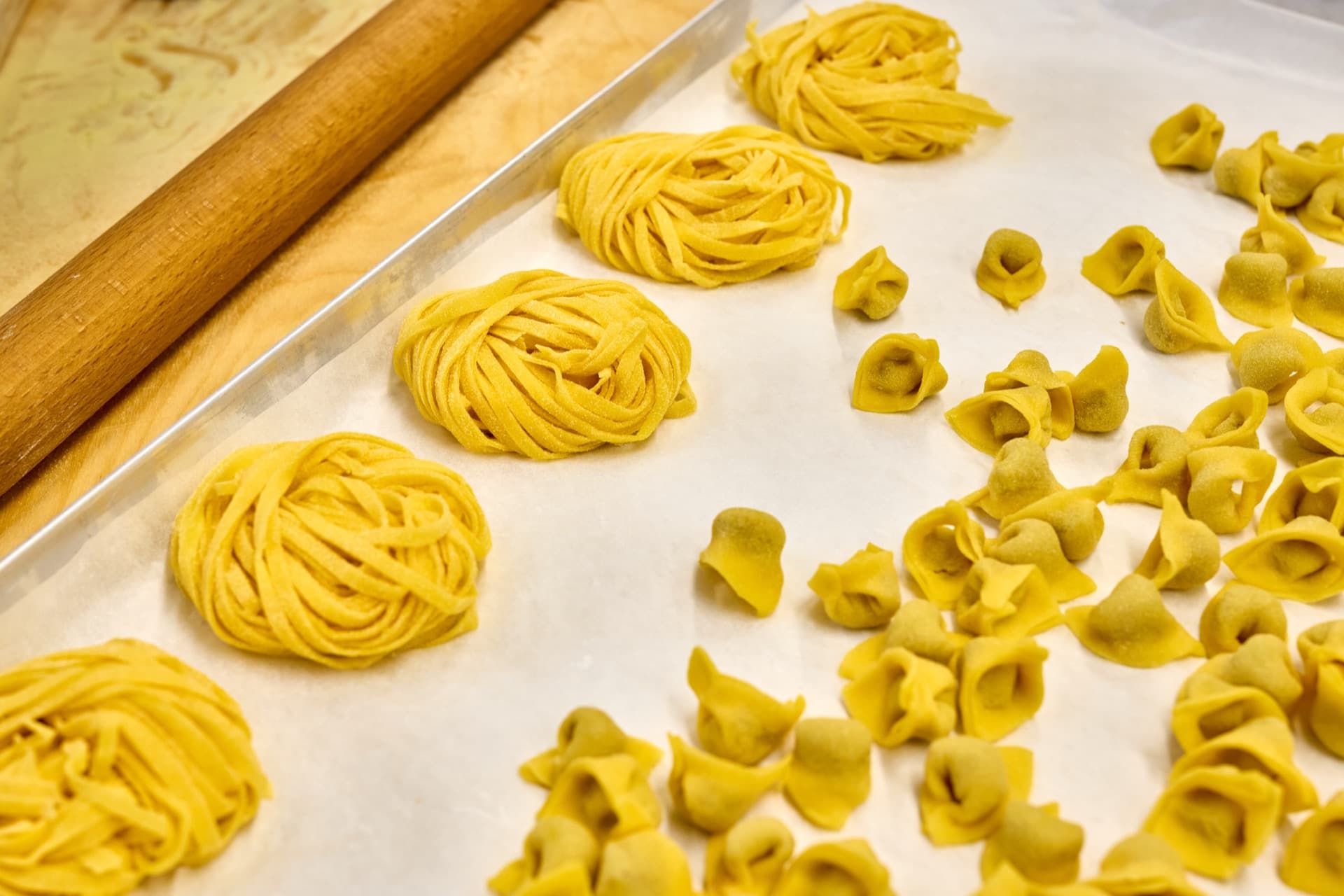
During the route, you can't miss a break to enjoy local specialties from the municipality of Terre Roveresche. For a quick coffee or an aperitif, you can choose from local bars like My Café or L'Angolo di Babù. For those seeking a more complete gastronomic experience, Il Castagno and Ristorante Montecucco restaurants offer typical dishes and menus related to local cuisine, perfect for savoring the area's excellent food and wine.
-
Blackout17
Via Pieve Canneti, 23, 61038 Orciano di Pesaro PU - Tel: 3339379537 -
Il Castagno
Via Giacomo Matteotti, 72, 61038 Orciano di Pesaro PU - Tel: 0721977672 -
L’angolo di Babù
Via Giacomo Matteotti, 64, 61038 Terre Roveresche PU - Tel: 3334560803 -
Lilli Cafè
Str. Orcianese 144, 61030 S. Giorgio Di Pesaro PU - Tel: 338 151 4028 -
Montecucco Restaurant
Via Montecucco, 27, 61030 San Giorgio di Pesaro PU - Tel: 0721 970150 -
My Cafè
Piazza Giuseppe Garibaldi, 52/53, 61038 Orciano di Pesaro PU - Tel: 0721977899 -
Nova Bar
Via Roma, 44, 61038 Barchi PU - Tel: - -
Osteria Casa Mina
Via S. Giorgio Castello, 5, 61030 San Giorgio di Pesaro PU - Tel: 3485684619 -
PizzaMania
Viale Evangelisti, 144, 61038 Orciano di Pesaro PU - Tel: 3333291791 -
Zia Pepe Aperipizza
Via Roma, 140, 61030 Terre Roveresche PU - Tel: 351 617 7754
Other Information
Categories
A piedi, Automobilistico
Esperienza digitale nei borghi connessi di Terre Roveresche – Percorso “Gli antichi mestieri” - CUP F61F25000000002 - Questo intervento è stato realizzato con il contributo di 45.000€ dell’Unione europea Bando POR FESR Marche 2021-2027 - Asse 1 - Azione 1.2.2 - Int. 1.2.2.2 Bando per “Servizi digitali integrati”